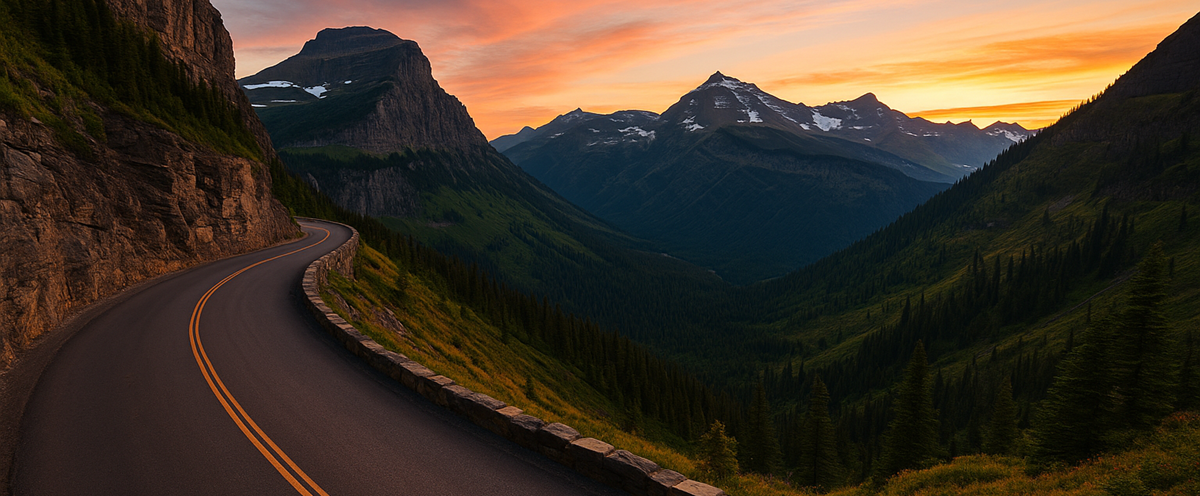
Going-to-the-Sun Road – The Ultimate Guide to America’s Most Breathtaking Drive
Few drives in the world can match the sheer beauty, drama, and sense of adventure offered by the Going-to-the-Sun Road in Glacier National Park, Montana. Stretching approximately 50 miles across the park, this scenic highway crosses the Continental Divide at Logan Pass and provides travelers with panoramic views of glacier-carved valleys, rugged mountain peaks, pristine alpine lakes, and vibrant wildflower meadows. More than just a route from one side of the park to the other, Going-to-the-Sun Road is an unforgettable journey through some of the most spectacular landscapes in North America.
A Road Built Against the Odds
Construction of Going-to-the-Sun Road began in 1921 and was completed in 1932, a remarkable engineering achievement for its time. The road was carved into the sides of steep cliffs, with hairpin turns and narrow passes designed to blend into the natural beauty of the park rather than dominate it. The builders faced extreme weather, dangerous terrain, and logistical challenges that would test any crew even today. Their success not only opened up Glacier National Park to more visitors but also created a masterpiece of road design that is now a National Historic Landmark and Historic Civil Engineering Landmark.
The Route – From West Glacier to St. Mary
The western gateway to Going-to-the-Sun Road is West Glacier, located near Lake McDonald. From here, the road winds along the lake’s edge before climbing steadily toward the alpine heights of Logan Pass. Along the way, drivers are treated to stunning views such as the cascading waters of McDonald Falls, the Avalanche Creek area, and the dramatic Weeping Wall – a cliffside where snowmelt streams directly onto the road.
Reaching Logan Pass at an elevation of 6,646 feet, travelers find themselves at the highest point of the road, standing on the Continental Divide. This is one of the most photographed spots in Glacier National Park, with sweeping views in every direction and trails that lead to Hidden Lake and the Highline Trail.
From Logan Pass, the road descends toward the eastern gateway at St. Mary, passing dramatic overlooks like Big Bend, Jackson Glacier Overlook, and Sunrift Gorge. The changing scenery – from lush forests to open alpine tundra to windswept grasslands – makes this route feel like several national parks in one.
Driving Experience and Seasonal Access
Because of its elevation and heavy snowfall, Going-to-the-Sun Road is only open in its entirety for a limited time each year. The full road usually opens in late June or early July and remains accessible until mid-October, though exact dates vary depending on weather conditions. Snow plowing in spring is a monumental effort that can last up to 10 weeks, with crews often clearing drifts up to 80 feet high.
Due to its narrow lanes, tight curves, and steep drop-offs, the road has length and width restrictions for vehicles. RVs and trailers longer than 21 feet or wider than 8 feet are not allowed between Avalanche Creek and Rising Sun. However, shuttle services and guided tours make it possible for everyone to experience the road without driving.
Wildlife and Natural Wonders
Travelers along Going-to-the-Sun Road are likely to encounter a variety of wildlife, from mountain goats and bighorn sheep at Logan Pass to black bears and grizzly bears in forested areas. Birdwatchers may spot Clark’s nutcracker, golden eagles, or even peregrine falcons soaring above the cliffs.
In summer, the alpine meadows explode with color as wildflowers such as beargrass, Indian paintbrush, and glacier lilies bloom. The views of the park’s remaining glaciers – including Jackson Glacier – serve as both a breathtaking sight and a reminder of the impacts of climate change on these fragile landscapes.
Photography Hotspots
Some of the best photo locations along the route include:
-
Lake McDonald Sunrise – Capturing the mirror-like water with mountain reflections.
-
The Loop – A famous hairpin turn offering dramatic vistas.
-
Big Bend – A sweeping curve with panoramic views of the valley.
-
Hidden Lake Overlook – A short hike from Logan Pass with postcard-perfect scenery.
-
Sun Point – Stunning views of St. Mary Lake and the surrounding peaks.
Tips for a Perfect Trip
-
Start Early – Parking at popular stops like Logan Pass fills up quickly.
-
Check Road Status – Always verify which sections are open before your trip.
-
Bring Layers – Weather can change rapidly at higher elevations.
-
Plan for Stops – Allow at least 2–3 hours to drive the full length without rushing, or more if you want to hike and explore.
-
Consider the Shuttles – Avoid parking hassles and enjoy the views without focusing on the road.
Beyond the Road
While the Going-to-the-Sun Road is the main attraction, Glacier National Park offers endless opportunities for exploration. Hiking trails lead to hidden waterfalls, pristine alpine lakes, and remote backcountry campsites. The park is also part of the Waterton-Glacier International Peace Park, a UNESCO World Heritage Site shared with Canada’s Waterton Lakes National Park.
Why This Road is a Bucket List Drive
Few places on earth combine engineering ingenuity with such unspoiled natural beauty. Whether you’re an avid photographer, a nature lover, or simply someone who appreciates a scenic drive, the Going-to-the-Sun Road delivers an experience that stays with you long after the journey ends. Every curve reveals a new view, every pull-off offers a chance to connect with the wild heart of Montana, and every mile feels like stepping deeper into a living postcard.